
First C-Section Recovery & Scar Healing Timeline + Photos
This post may contain affiliate links, which means I’ll receive a commission if you purchase through my links, at no extra cost to you. Please read full disclosure for more information.
Before having my first c-section, I had absolutely no idea what to expect from c-section recovery or what a c-section scar was supposed to look like as it healed.
Throughout my pregnancy, I had come across so many scary c-section recovery stories. I read about infections, incisions opening back up, difficult recoveries, and of course, the dreaded c-section scar and “c-section shelf.”
And considering I was preparing for an unmedicated vaginal birth, a c-section was pretty much the last thing I thought I’d need to prepare for.
Then I ended up having one anyway.
I labored all the way to 9 cm before finding out my baby’s head was positioned asynclitic, and what I thought would be a vaginal delivery quickly turned into my first and completely unexpected c-section.
Suddenly, I had an incision across my lower abdomen and SO many questions. What was my scar supposed to look like? How long would it hurt? When would I be able to move normally again? And would my stomach and scar always look like this?
So I started taking pictures.
I documented my first c-section scar throughout my recovery, from the very beginning through one year postpartum. In this post, I’m sharing those real photos along with what my incision looked and felt like at different stages, what recovery was actually like for me, and the things I wish I had known before recovering from my first c-section.
I’ve now had three c-sections, and looking back at my very first recovery, especially now as a Labor & Delivery RN, gives me an entirely different perspective on what I experienced.
If you’re preparing for your first c-section or you’re currently recovering from one and wondering Is this normal? Is my scar supposed to look like this? Will it always look this way? I hope seeing one real c-section recovery from beginning to end helps you feel a little more prepared for what the healing process can look like.
Every incision and recovery is different, though. My experience and photos are for educational purposes and shouldn’t be used to determine whether your own incision is healing normally. If you’re concerned about your incision or recovery, contact your own healthcare provider.
What My First C-Section Recovery Was Really Like
Before having my first c-section, I knew it was considered major abdominal surgery, but I don’t think I truly understood what that would mean for recovery until I was actually living it.
My c-section was completely unexpected. I had labored all the way to 9 centimeters and thought I was getting close to meeting my baby vaginally. Then we found out her head was positioned asynclitic, and everything changed pretty quickly.
One minute I was laboring, and the next I was being prepared for my first c-section.
C-sections can happen for so many different reasons. Sometimes they’re planned ahead of time, and other times like mine, they become necessary during labor because of concerns involving mom, baby, labor progression, positioning, or other complications.
What I wasn’t prepared for was how much the recovery would affect the smallest everyday movements.
Getting out of bed hurt. Standing up straight felt difficult at first. Coughing, laughing, rolling over, getting dressed, using the bathroom, and simply picking up my baby all made me very aware that I had just undergone surgery.
And somehow, while your body is trying to recover, you’re also expected to care for a brand-new baby.
That was probably one of the biggest shocks of my first c-section recovery.
There really isn’t much downtime after birth. You’re learning how to feed your baby, waking throughout the night, changing diapers, getting in and out of bed, and adjusting to postpartum life while your incision is still fresh and sore.
C-section recovery can also take longer than recovery after an uncomplicated vaginal birth, and discomfort may last for several weeks. Most people are encouraged to gradually get moving while still avoiding overexertion as their body heals.
Looking back now after three c-sections, I think the hardest part of my first recovery was simply not knowing what was normal.
I didn’t know what my incision was supposed to look like.
I didn’t know how much pain was normal.
I didn’t know when I would start feeling like myself again.
And I definitely didn’t know how much my scar would change over the next several months.
That’s one of the biggest reasons I’m sharing my first c-section recovery and scar-healing journey here. I wanted other first-time c-section moms to be able to see a real recovery over time, not just the first few days after surgery, but what that scar can look like weeks and even months later.
10 Things That Helped During My First C-Section Recovery
Now that I’ve had three c-sections, there are definitely things I would do differently during my first c-section recovery.
The first time around, I really had no idea what to expect. I didn’t know how much I should be moving, how much I should be resting, what my incision was supposed to look like, or when I would finally start feeling normal again.
I also learned the hard way that feeling a little better does not mean your body is completely healed.
These are some of the things that helped during my first c-section recovery, along with a few things I understand much differently now after going through three c-sections and becoming a Labor & Delivery RN.
Of course, every c-section recovery is different. Always follow the discharge instructions and recommendations given to you by your own healthcare team.
1. Leave Your C-Section Incision Alone
I am a picker, so this was harder for me than it probably should have been.
As my incision started healing and the Dermabond began peeling, it was SO tempting to mess with it. But I was specifically instructed to leave my incision and surgical glue alone and allow everything to come off on its own.
Depending on how your incision was closed, your wound-care instructions may look different from mine. Follow the instructions you were given and resist the urge to pick at your incision, glue, Steri-Strips, scabs, or anything else that’s healing.
Your body is already doing the work. Let it.
2. Stay Ahead of Your Pain Using the Plan Your Provider Gave You
The first couple of weeks were definitely the hardest part of my first c-section recovery.
During the first week, my pain was pretty consistent. By the second week, I would have periods where I felt surprisingly good followed by moments when the pain would suddenly remind me that I had just undergone major surgery.
I set alarms on my phone to keep track of the pain medications that had been prescribed or recommended to me. Having a system helped because those newborn days were already such a blur.
Follow the medication instructions given to you at discharge, and don’t be afraid to tell your healthcare provider if your pain isn’t being adequately controlled or suddenly becomes significantly worse.
And don’t feel like you need to prove how tough you are.
You just had a baby and surgery. It’s okay to need help.
3. Give Your Body the Nutrition It Needs to Heal
This is one area where my perspective has changed a lot.
During my first c-section recovery, I was still very focused on losing the baby weight and getting my body back. Looking back now, I wish I had spent less energy thinking about weight loss and more energy thinking about everything my body had just been through.
Your body needs nourishment while recovering from birth and surgery.
I tried to prioritize meals with protein, carbohydrates, healthy fats, fruits and vegetables while keeping easy foods around for the days when cooking was the absolute last thing I wanted to do.
This is also where accepting help can make a huge difference. If someone offers to bring you dinner, take them up on it!
Those first few weeks are not the time to put pressure on yourself to “bounce back.”
4. Rest, But Don’t Be Afraid of Gentle Movement
I learned this one the hard way.
Once I started feeling a little better, I wanted to get back to normal. I was doing dishes, bending over, cleaning, taking care of my baby, and trying to do way more around the house than I probably needed to.
Looking back, I wish I had given myself more permission to rest.
The dishes can wait.
The laundry can wait.
The house does not need to be spotless.
At the same time, recovery doesn’t necessarily mean lying in bed all day. I was encouraged to get up and gently move around as I was able, and walking became an important part of my recovery.
There’s a big difference between gently moving your body and trying to prove you can go back to doing everything you did before surgery.
Listen to your body and follow the activity restrictions your healthcare team gives you.
5. Be Gentle With Your Incision in the Shower
You do not need to scrub your c-section incision with a loofah.
Trust me, I know how tempting it is when you see surgical glue, dried blood, or scabby-looking areas and just want everything to look clean again.
Leave it alone.
I followed the wound-care instructions I was given, gently cleaned the area as directed, and carefully patted it dry instead of rubbing or scrubbing it.
Your specific instructions may depend on how your incision was closed, so follow what your healthcare team tells you.
And if you notice increasing redness, swelling, drainage, worsening pain, your incision opening, fever, or anything else that concerns you, contact your healthcare provider rather than trying to treat it yourself.
6. Wait Until Your Incision Is Healed Before Starting Scar Massage
Scar massage was something I learned about during my recovery, but it is NOT something I would recommend doing on a fresh c-section incision.
I waited until my incision had healed and I had talked with my healthcare provider before I started massaging the area.
Once I was cleared, scar massage became part of the way I cared for my c-section scar.
If you’re interested in scar massage after your first c-section, ask your OB or another qualified healthcare professional when it is appropriate for your incision. Everyone heals differently, and your scar needs time to close and heal first.
7. Drink your water.
This one sounds ridiculously simple, but postpartum life makes it surprisingly easy to forget basic things like drinking water.
I kept water close to me throughout the day, especially when I was spending long stretches sitting with or feeding my baby.
Between recovering from surgery, postpartum changes, sleepless nights, and caring for a newborn, staying hydrated was one of those small things that helped me feel better overall.
Find a giant water bottle you love, keep it within reach, and make hydration easy on yourself.
8. Wait Until Your Scar Is Healed Before Using Scar Products
My scar went through some pretty dramatic stages.
At different points it looked red, purple, raised, bumpy, irritated, and honestly just plain ugly to me.
I remember wondering if it was ever going to look normal again.
Once my incision was completely healed and I had the green light to start caring for the scar itself, I became much more intentional about it.
At the time, I used Mederma scar gel and gently massaged it into my scar. I also bought several other c-section recovery products, but honestly, I didn’t end up using most of them.
Looking back years later, one of the biggest things I wish I had understood was simply how much a c-section scar can change with time.
You don’t have to panic because your scar looks red, raised, dark, or uneven early in the healing process. Mine changed tremendously over the months that followed.
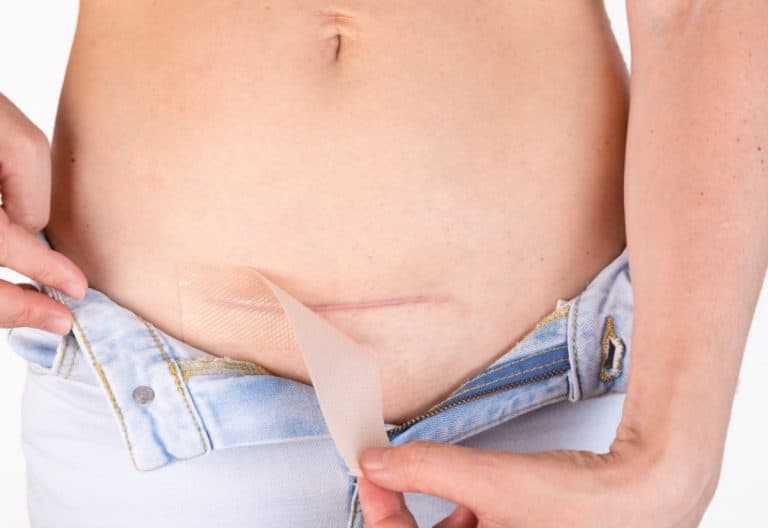
If you’re interested in using silicone sheets, silicone gel, scar massage, or another scar treatment, wait until your incision has healed and talk with your healthcare provider about what’s appropriate for you.
9. Ease Back Into Exercise
One of the biggest mistakes I think we can make after having a baby is feeling like we need to rush back into our old bodies and routines.
You don’t.
During my first c-section recovery, I felt good enough to walk slowly on the treadmill for about 20 minutes around four weeks postpartum. But that’s my experience, not a timeline every c-section mom should follow.
I was active before and during my pregnancy, and my recovery was my own.
Your return to exercise should depend on how you’re healing, how you’re feeling, whether you had any complications, and the guidance you’re receiving from your healthcare team.
Start slowly and give yourself grace.
If you’re experiencing concerns with your core, pelvic floor, diastasis recti, pain, pressure, leaking, or anything that doesn’t feel right when you return to exercise, it may also be worth talking with your provider or a pelvic floor physical therapist.
Your body doesn’t need to “bounce back.”
It needs time to recover.
10. Let People Help You
If I could go back and tell first-time c-section mom me one thing, it would probably be this:
You don’t have to do everything yourself.
Let someone bring you dinner.
Let your husband or partner hand you the baby instead of getting up for the hundredth time.
Let the dishes sit in the sink.
Let your family love on that baby while you take a shower or close your eyes for a little while.
I think I felt like I needed to prove that I could handle everything after my first c-section. But there is absolutely no prize for being the mom who needed the least amount of help.
You’re recovering from surgery while simultaneously learning how to care for a brand-new human.
That’s a lot.
After having three c-sections, I can tell you that one of the biggest things I learned was to stop rushing my recovery. Your incision will heal. Your scar will change. Your strength will come back.
Give your body time.
And if you’re in the middle of your first c-section recovery right now, I hope the photos throughout the rest of this post give you a little perspective on just how much a c-section scar can change as the weeks and months go by.
Related Posts
5 Things I Wish I Knew And Did Before My Unexpected C Section Experience
10 crucial steps To Start Getting Rid Of Your C Section Shelf Now
What To Expect Before, During, And After Your First Period After A C-Section Birth
My C-Section Scar Healing Timeline: From Day 1 to One Year
After more than 17 hours of labor and contractions, making it all the way to 9 cm dilated, and having my water broken for about 10 hours, I was told my daughter was not in a favorable position for a vaginal birth.
Her heart rate was dropping, and my doctor recommended moving forward with a c-section.
I had spent my entire pregnancy preparing for a vaginal birth, so becoming a first-time c-section mom was never something I expected.
You can read the full story of how my labor unfolded in my Midwives Brew experience and birth story.
The following morning, less than 24 hours after surgery, I finally worked up the courage to look at my c-section incision.
My belly was still swollen. I was so sore that I could barely lean forward from the hospital bed to see the incision, and emotionally, I was still trying to process everything that had happened the day before.
I remember feeling powerless, like I had lost control of my own birth experience.
And when it finally hit me that I had this huge incision across my lower abdomen, I struggled with the way I saw my body.
I didn’t want to look at myself in the mirror. I didn’t want my husband to look at me. At the time, I honestly felt ashamed of my body and like it had somehow failed me.
Looking back now, I wish I could sit beside that version of myself and tell her how wrong she was.
My body hadn’t failed me.
It had labored for more than 17 hours. It had made it to 9 centimeters. It had undergone an unexpected major surgery. And most importantly, it had brought my baby safely into my arms.
I didn’t need to punish my postpartum body for looking different. I needed to nourish it, care for it, and give it time to heal.
So if you’re looking at your own c-section scar for the first time and struggling with what you see, I understand. Your incision is at the very beginning of its healing process, and your postpartum body has just been through so much.
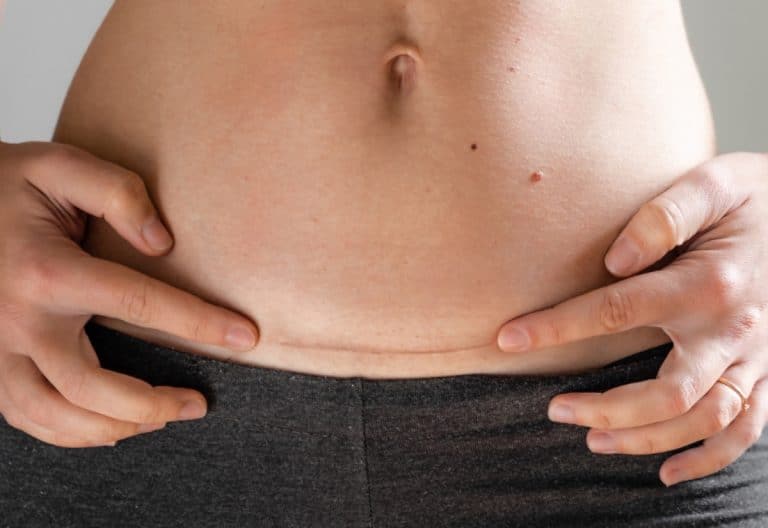
Here’s what my first c-section scar looked like as it healed from less than 24 hours postpartum through one year after birth.
Less Than 24 Hours After My C-Section
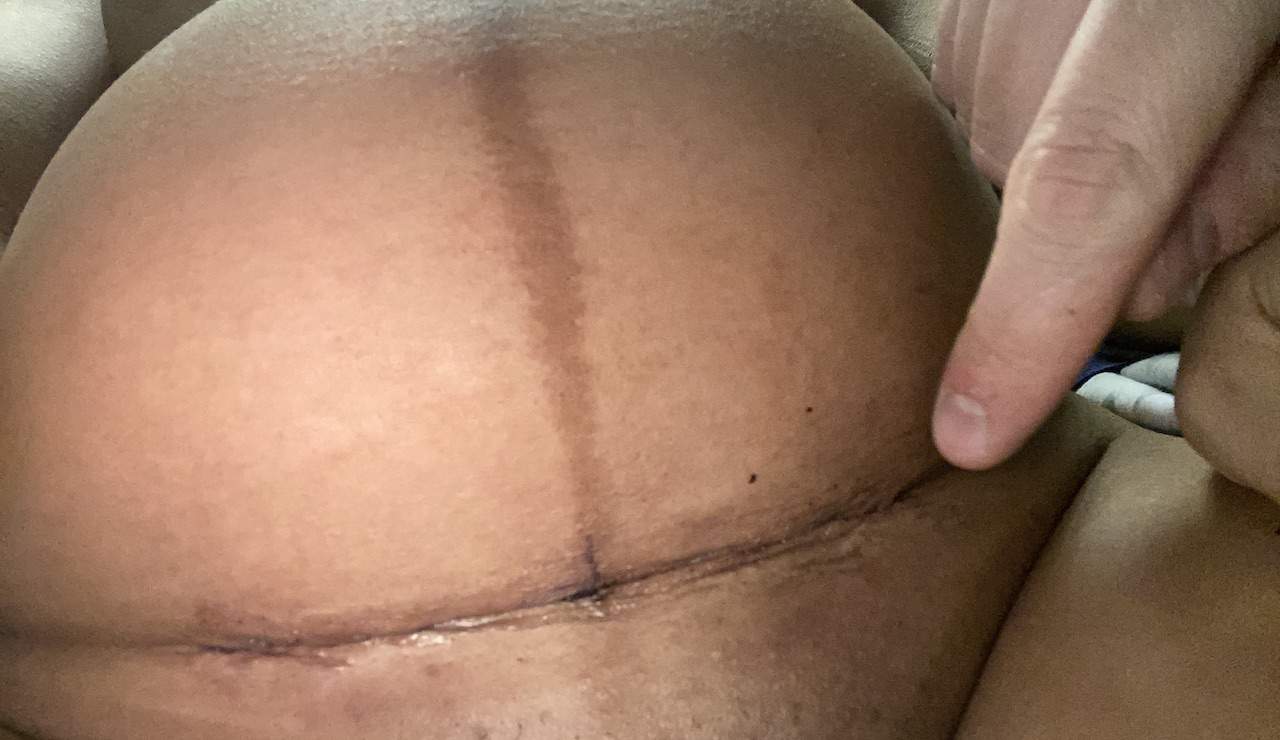
The area around my incision was completely numb, which was such a strange feeling. I could see the incision, but I couldn’t really feel much around it yet.
My doctor used Dermabond, a surgical skin glue, to help close the outer layer of my incision. I was told to leave it alone and let it gradually peel away on its own as the incision healed.
At this point, everything was still very fresh. My lower abdomen was swollen, sore, and tender, and I was still trying to wrap my head around the fact that I had just had my first c-section.
4 Days Postpartum
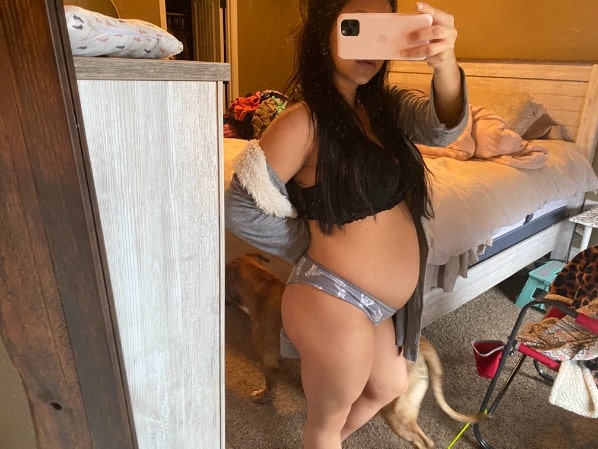
At four days postpartum, my abdomen was still very swollen and my incision was obviously still in the very early stages of healing.
I was still sore and moving slowly, but I was already starting to feel a little more mobile than I did during those first 24 hours. The area around my c-section scar was still numb, and the Dermabond was completely intact.
Looking back at this photo now, I wish I had understood just how normal it was for my stomach to still look pregnant after giving birth. My body had just gone through more than 17 hours of labor, pregnancy, birth, and an unexpected c-section. It needed time to heal, not pressure to immediately look the way it did before pregnancy.
7 Days Postpartum
9 Days Postpartum
13 Days Postpartum
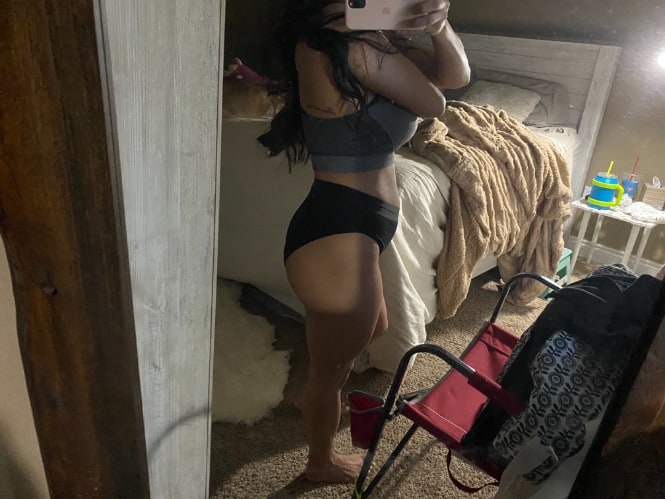
23 Days Postpartum
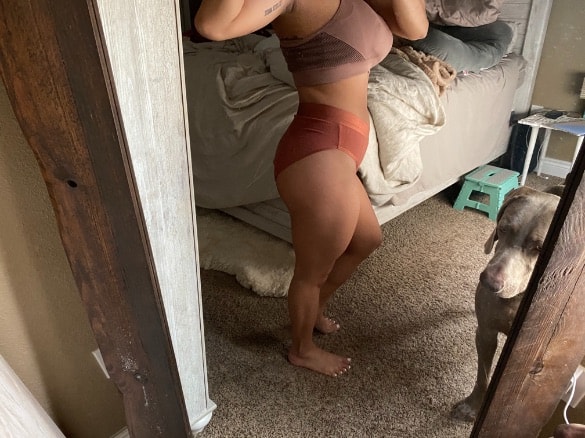
4 Weeks Postpartum
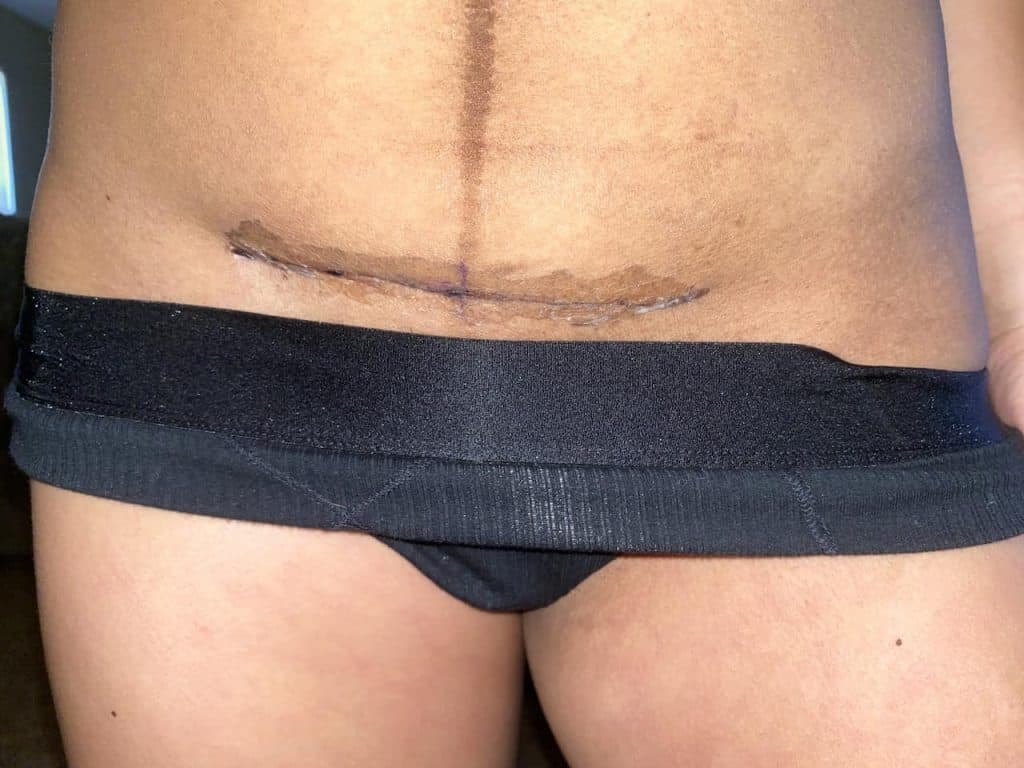
At four weeks postpartum, the Dermabond was still hanging on. I was definitely tempted to start picking and peeling it off, but it was stuck to my skin so well that I couldn’t even get ahold of most of it.
By this point, my c-section incision looked much less intimidating than it did during those first few days, but it was still healing. The area around my scar was also still numb, which was one of the strangest parts of my first c-section recovery that I wasn’t expecting.
I continued leaving the surgical glue alone and letting it come off on its own rather than picking at it.
7 Weeks And 6 Days Postpartum
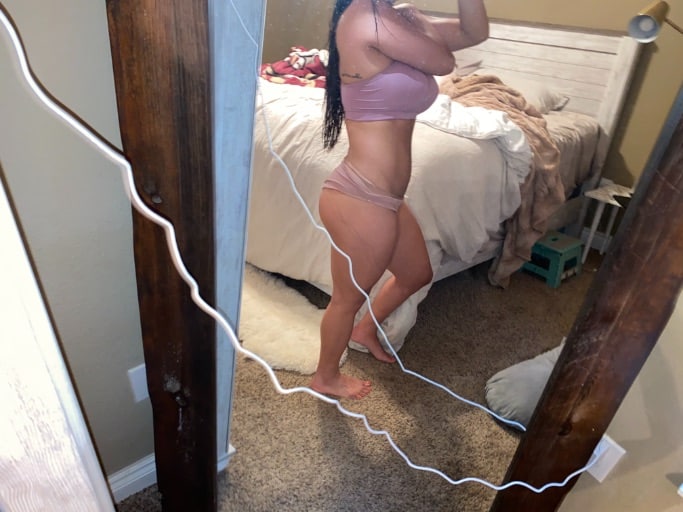
19 Weeks And 1 Day Postpartum
26 Weeks Postpartum
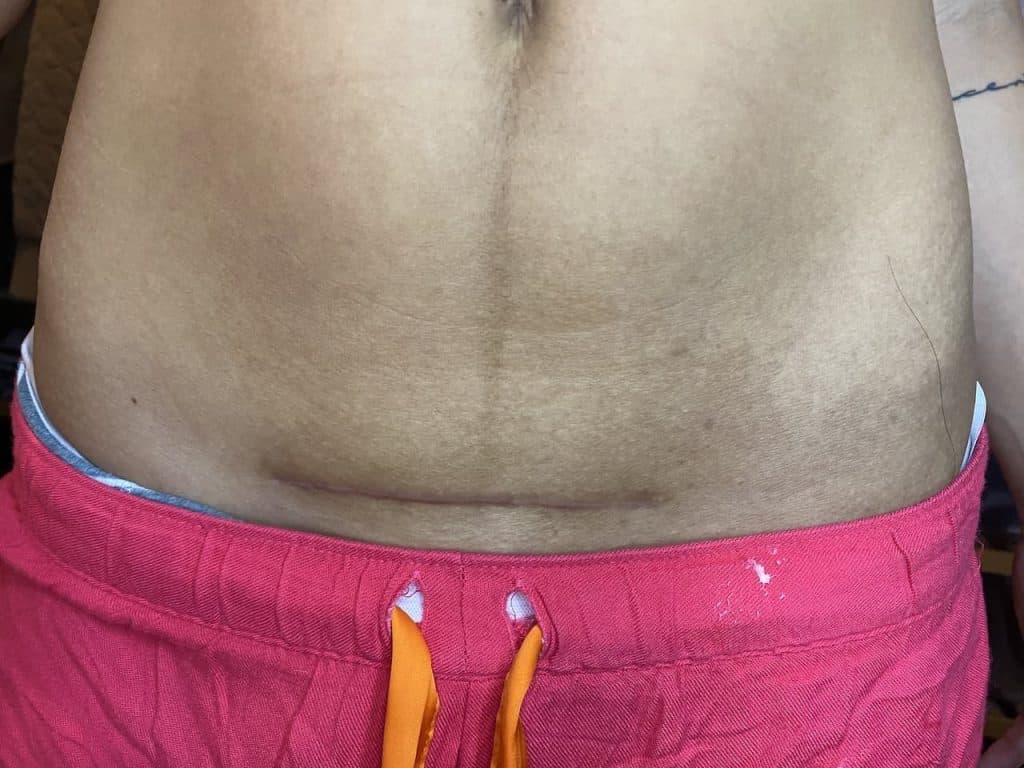
By 26 weeks postpartum, about six months after my first c-section, my scar had changed quite a bit. It had become darker and looked much more like a healed scar than the fresh incision I had been watching so closely during those first few weeks.
This was also around the time I finally stopped having that irrational fear that my incision was somehow going to randomly open back up. Looking back, I can laugh a little at how nervous I was about it, but as a first-time c-section mom, I truly had no idea what healing was supposed to look like.
My scar still wasn’t completely faded at this point, but comparing this photo to those first postpartum pictures really showed me just how much a c-section scar can change over time.
36 Weeks Postpartum
10 Months And 1 Week Postpartum
11 Months And 18 Days
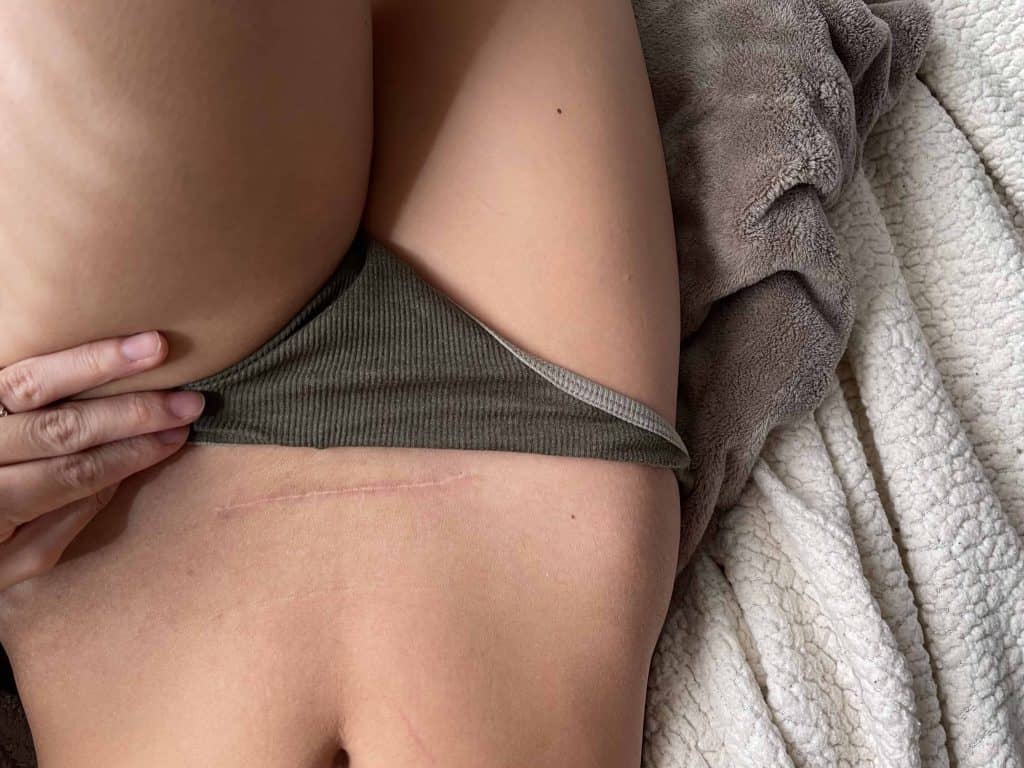
Check out Second C-Section Recovery: My Scar Healing Timeline + Photos
My First C-Section Recovery Kit
After going through three c-sections, I can confidently say you really don’t need every single c-section recovery product you see online.
I bought quite a few things after my first c-section, and some were helpful while others barely got used.
If you’re preparing for your first c-section, these are a few of the things that personally helped make my recovery a little more comfortable.
Heating Pad
A heating pad was one of my favorite things to have nearby during postpartum recovery. I personally used mine on areas like my lower back when I was uncomfortable.
Because you’ll have a fresh surgical incision and decreased sensation around the area can happen after a c-section, I would follow your healthcare provider’s instructions about when and where heat is safe to use rather than placing heat directly over your incision.
Stool Softener
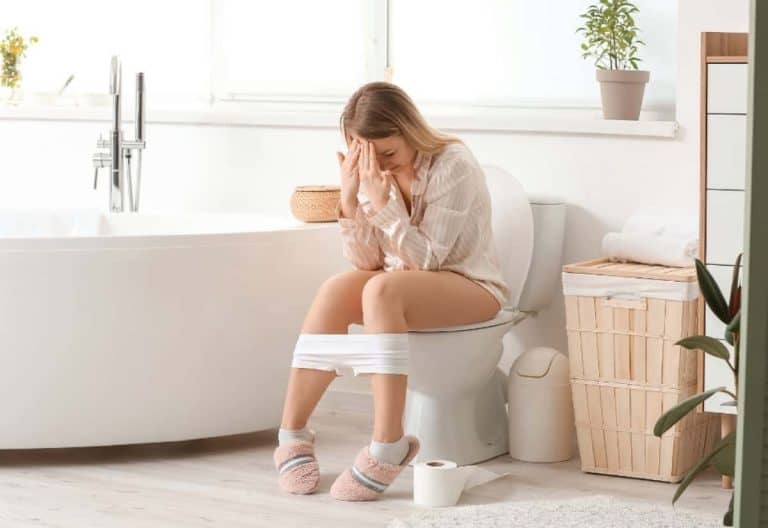
Let’s talk about something nobody really wants to talk about after having a baby: that first postpartum poop.
Between abdominal surgery, certain pain medications, decreased movement, and all of the changes happening postpartum, constipation was a struggle for me.
I used a stool softener during my recovery, and when that wasn’t enough, I talked with my healthcare team about other options.
If you’re preparing for your first c-section, this is definitely something worth discussing with your provider before you leave the hospital, especially if you’re taking medications that can contribute to constipation.
And please learn from me: straining when you’re already sore from abdominal surgery is NOT a good time.
Scar Care Products
Once my incision was completely healed and I was cleared to start caring for the scar itself, I started paying more attention to its appearance.
At the time, I used Mederma scar gel. The gel texture also made it more comfortable for me when I began gently touching and massaging the area.
I bought several other c-section recovery products too, but honestly, I didn’t end up using most of them.
If I were preparing for my first c-section all over again, I wouldn’t buy every scar product on the internet. I’d wait until my incision healed, talk with my provider about when I could begin scar care, and then decide what I actually wanted to use.
And one of the biggest things I’ve learned since then is that time makes a huge difference in the appearance of a c-section scar.
What I Wish I Could Tell Myself After My First C-Section
If I could go back to those first few days after my c-section, I wish I could tell myself to stop being so hard on my body.
I spent way too much time worrying about how my stomach looked, what my scar would eventually look like, and whether my body would ever feel like mine again.
I wish I had understood that my body hadn’t failed me. It had grown my baby and brought her safely into this world, even if it didn’t happen the way I had planned.
I’ve now had three c-sections, and I see that first scar so differently than I did when I took these photos.
If you’re recovering from your first c-section right now, don’t rush yourself. Your body doesn’t need to “bounce back,” and your scar doesn’t need to disappear.
Give your body and yourself time to heal.



This post has been super helpful! I’m really looking forward for more advice and tips. I will have a schedule c section in two weeks due to my baby’s breech position and I’m really happy to hear and see positive posts like this!
I’m so glad it’s helpful! I hope your c section goes smoothly and you and your baby stay safe and healthy. I will post more c section related posts for you! Thanks for reading!
Really helpful for new moms going for a c-section.Liked it.
This is such amazing information. I think this is something that no one seems to talk about before giving birth!
Thank you! Yes, I wish I knew more information like this before going into labor!
I REALLY can’t stand women telling such awful things like “”this way of getting a baby isn’t the right one””, or “‘you have choosen the easy way”” and all this staff. They have just to understand that in many cases, like yours and mine, it’s not an option!!! And it’s not only that we have to kind of suffer for much longer. There is a strong pain for a very long time, even when the weather condition are about change, imagine the first weeks!!! ANd the most important thing… In many many cases we have been in great danger, with both of our lives (our baby’s and ours) have crusial moments… This makes us love less our baby? I don’t think so!!! Anyway, that you for sharing your experience and i really hope you and your family are doing well…
I’m so glad you can relate! Even after 8 months postpartum, my incision gets tight and tender. Most definitely mama! We chose our babies which means any method to get them out safely. Thank you for your comment! We are doing amazing and hope you and your family are well as well!
Really helpful for new moms going for a c-section.Liked it.
Thank you so much!!
Really great and thorough advice for the C-section mom! Great tips for everything from healing to getting your body back.
Thank you!! It’s good to know c-sections can totally happen and we should be prepared even when trying for a vaginal delivery.
I will be passing this great info along to my C-section mamas!
A great article for c section mamas! A lot of useful information and facts!
Thank you! Glad you think so!
Thank you for sharing this wonderful article. I struggled with my c-section experience with my second child. Lots of uplifting points here.
XO,
Len | https://www.happilythrivingafter.com/
Aww thank you! It definitely can be hard not only physically, but also mentally.
Thank you so much for sharing all this – it’s SO helpful. I have a c-section scheduled in a few days, and it’s my first child, so I’ve been freaking out a little! lol I’m such a planner that knowing what to expect and buying some things ahead of time is really calming my nerves. I can’t thank you enough for this post!!!
Hi Jessenia! I’m soooo happy you found this post helpful! I will be thinking about you and I hope everything goes well. E-mail me if you have any questions. Just know to take it easy, hydrate, and get as much sleep as you can during the newborn stage!